
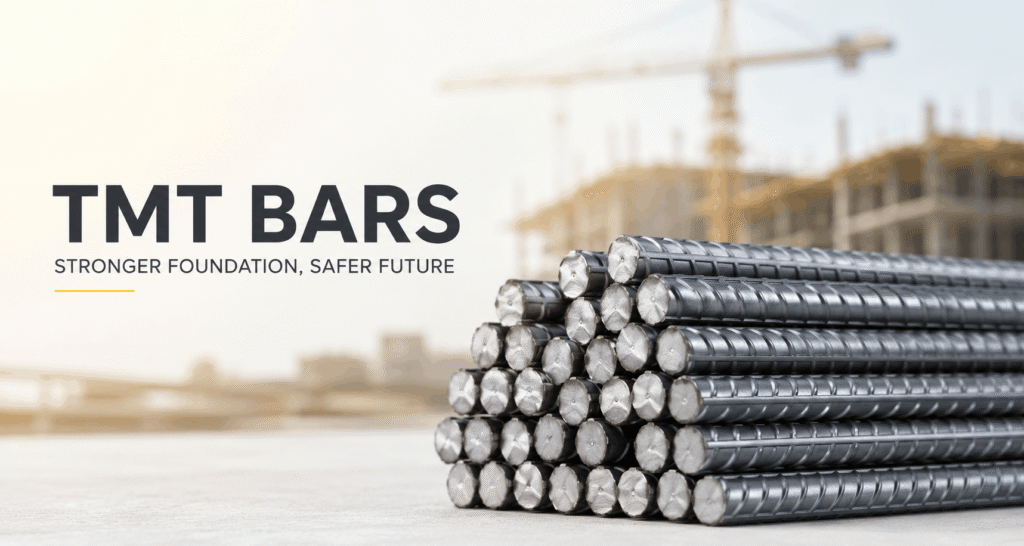
The TMT bar manufacturing process plays a crucial role in determining the strength, durability, and overall quality of reinforcement steel. Modern construction projects rely on high-quality Thermo-Mechanically Treated bars because they provide excellent tensile strength, flexibility, and resistance to harsh environmental conditions.
Understanding how TMT bars are manufactured helps builders, contractors, and homeowners make informed decisions when selecting reinforcement steel for residential, commercial, and industrial projects. Every stage of the manufacturing process, from raw material selection to controlled cooling, directly impacts the final performance of the bars.
As demand for stronger construction materials continues to grow, many Local Steel Manufacturers have adopted advanced production technologies to produce reliable TMT Steel Bars that meet national and international quality standards.
Table of Contents
ToggleWhat Are TMT Bars?
TMT (Thermo-Mechanically Treated) bars are high-strength reinforcement bars produced using a specialized heat treatment process that combines controlled rolling and rapid cooling. This unique TMT process creates a hard outer surface while maintaining a ductile inner core, resulting in steel bars that offer both strength and flexibility.
These bars are widely used in modern construction because they can withstand heavy structural loads, seismic activity, and changing weather conditions. Compared to conventional reinforcement bars, TMT bars provide better durability and a longer service life.
They are available in different Steel Grades, such as Fe-500, Fe-500D, and Fe-550, allowing engineers to select the most suitable grade based on the structural requirements of a project.
Raw Materials Used in TMT Bar Manufacturing
The quality of a finished TMT bar begins with the quality of its raw materials. Manufacturers carefully select and inspect every material before starting production to ensure consistent performance.
Iron Ore or Scrap Steel
The manufacturing process starts with either high-grade iron ore or recycled scrap steel. These materials are melted in furnaces to produce molten steel with the desired chemical composition.
Carbon and Alloying Elements
Controlled amounts of carbon, manganese, silicon, and other alloying elements are added to improve the steel’s mechanical properties. Maintaining the correct chemical balance is essential for achieving the required strength and ductility.
Steel Billets
Once refined, the molten steel is cast into semi-finished products known as steel billets. These billets serve as the primary raw material for rolling mills, where they are transformed into reinforcement bars.
Using high-quality raw materials ensures the final TMT bars meet strict quality standards and deliver reliable performance in demanding construction applications.
Step 1: Steel Billet Production
The first stage of the TMT bar manufacturing process involves producing high-quality steel billets.
Raw materials are melted in a furnace at extremely high temperatures to create molten steel. During this stage, impurities such as sulfur, phosphorus, and other unwanted elements are removed through refining to improve the steel’s quality.
The refined molten steel is then poured into a continuous casting machine, where it solidifies into rectangular steel billets. These billets are carefully cooled and cut into standard lengths before moving to the next production stage.
Before further processing, each billet undergoes quality inspection to verify its dimensions, surface condition, and chemical composition. Only billets that meet the required standards proceed to manufacturing.
Step 2: Billet Reheating
Before rolling, the steel billets are reheated in a reheating furnace to temperatures ranging between 1,100°C and 1,250°C. This makes the steel sufficiently soft and workable for shaping.
Uniform heating is essential because uneven temperatures can lead to defects during rolling. Modern furnaces use automated temperature control systems to ensure every billet reaches the required temperature consistently.
Proper reheating prepares the billets for efficient deformation while preserving the steel’s mechanical properties.
Step 3: Hot Rolling Process
After reheating, the billets pass through a series of rolling mills where they are compressed by heavy rollers. Each rolling stand gradually reduces the billet’s cross-section while increasing its length.
The hot rolling process shapes the steel into the required diameter, producing reinforcement bars in various sizes suitable for different construction applications.
Precise control over rolling speed, pressure, and temperature ensures uniform dimensions, smooth surface quality, and consistent mechanical properties. This stage also prepares the bars for the next manufacturing step, where surface ribs are formed to improve bonding with concrete.
Step 4: Rib Formation
After hot rolling, the bars pass through specially designed rollers that create raised ribs on their surface. These ribs improve the grip between steel and concrete, reducing the chances of slippage under heavy loads.
Unlike plain bars, ribbed TMT bars provide stronger bonding, making them the preferred choice for reinforced concrete structures. This is one of the key differences discussed in Deformed vs Plain Bars, where ribbed bars consistently offer better structural performance.
Step 5: Thermo-Mechanical Treatment (TMT Process)
The TMT process is the most critical stage of manufacturing. It gives the bar its unique combination of high strength, flexibility, and durability.
Rapid Water Quenching
As the hot bars leave the rolling mill, they pass through a water-cooling system. The outer surface cools rapidly, forming a hard and strong outer layer while the core remains hot.
Self-Tempering
The heat from the hot core naturally flows toward the cooled outer layer. This self-tempering process reduces internal stress and improves the bar’s toughness and ductility without making it brittle.
Atmospheric Cooling
The bars are then placed on cooling beds, where they cool naturally in the open air. During this stage, the core develops a fine-grained ferrite-pearlite structure, giving the bar excellent strength, flexibility, and long-term performance.
Step 6: Cutting and Bundling
After cooling, the TMT bars are cut into standard lengths using automated cutting machines. The bars are then bundled according to their size and grade for easier handling.
Each bundle is labeled with essential details such as bar diameter, grade, batch number, and manufacturer information. Proper bundling and labeling simplify storage, transportation, and product identification at construction sites.
Step 7: Quality Testing and Inspection
Before dispatch, every batch undergoes quality testing to ensure it meets the required standards. These tests verify the strength, flexibility, chemical composition, and dimensional accuracy of the bars.
Tensile Strength Test
This test measures the maximum load a TMT bar can withstand before breaking, ensuring it is suitable for structural applications.
Yield Strength Test
The yield strength test determines the load at which the bar begins to deform permanently. This value helps classify the bar into different Steel Grades.
Must Read: Yield Strength vs Tensile Strength
Bend Test
The bar is bent to a specified angle to check whether it can withstand deformation without developing cracks.
Re-Bend Test
After bending and controlled aging, the bar is bent again to verify its flexibility and resistance to fracture under repeated stress.
Chemical Composition Test
Laboratories analyze the steel’s chemical composition to ensure carbon, sulfur, phosphorus, and other elements remain within acceptable limits.
Dimensional Accuracy Check
Manufacturers inspect the bar’s diameter, rib pattern, weight, and length to confirm compliance with industry standards.
Thorough quality testing ensures only reliable TMT bars reach the market, providing builders and engineers with confidence in every construction project.
Properties of High-Quality TMT Bars
High-quality TMT bars offer several properties that make them suitable for modern construction projects.
- High Tensile Strength: Capable of handling heavy structural loads without failure.
- Excellent Ductility: Can bend under stress without breaking, making structures safer during earthquakes.
- Earthquake Resistance: The combination of strength and flexibility helps absorb seismic forces.
- Corrosion Resistance: Advanced manufacturing improves resistance to rust and moisture.
- Fire Resistance: Maintains structural integrity even at elevated temperatures.
- Strong Bonding with Concrete: Ribbed surfaces provide excellent grip, improving the overall strength of reinforced concrete structures.
Applications of TMT Bars
TMT bars are widely used in almost every type of construction project because of their strength and durability.
They are commonly used in:
- Residential buildings
- Commercial complexes
- High-rise buildings
- Bridges and flyovers
- Dams and water infrastructure
- Industrial plants and warehouses
Their versatility makes them an essential component of the growing Pakistani Steel Industry, where reliable reinforcement steel is critical for long-lasting infrastructure.
Why the TMT Manufacturing Process Is Important
Every stage of the TMT bar manufacturing process directly affects the final quality of the product. From selecting raw materials to thermo-mechanical treatment and quality testing, each step ensures the bars meet strict performance standards.
A well-controlled manufacturing process:
- Improves structural strength
- Increases service life
- Enhances safety
- Reduces maintenance costs
- Ensures consistent product quality
This is why choosing products from the best steel company in Pakistan or trusted manufacturers can make a significant difference in construction quality.
How to Choose Quality TMT Bars
Selecting the right TMT bars is just as important as understanding how they are manufactured. Consider the following before making a purchase:
- Buy from a reputable steel manufacturer with a proven track record.
- Check product certifications and quality test reports.
- Verify the required Steel Grades, such as Fe-500, Fe-500D, or Fe-550.
- Inspect the rib pattern, surface finish, and overall appearance for uniformity.
Following these checks helps ensure you’re investing in high-quality reinforcement steel for your project.
Conclusion
Understanding the complete TMT bar manufacturing process helps builders, engineers, and property owners appreciate the technology behind modern reinforcement steel. From producing steel billets and hot rolling to thermo-mechanical treatment and rigorous quality testing, every manufacturing stage contributes to the strength and durability of the final product.
Choosing high-quality Thermo-Mechanically Treated bars from a trusted manufacturer ensures safer structures, longer service life, and lower maintenance costs. Whether you’re constructing a home, commercial building, or major infrastructure project, investing in premium TMT bars is a smart decision for long-term structural performance.
