
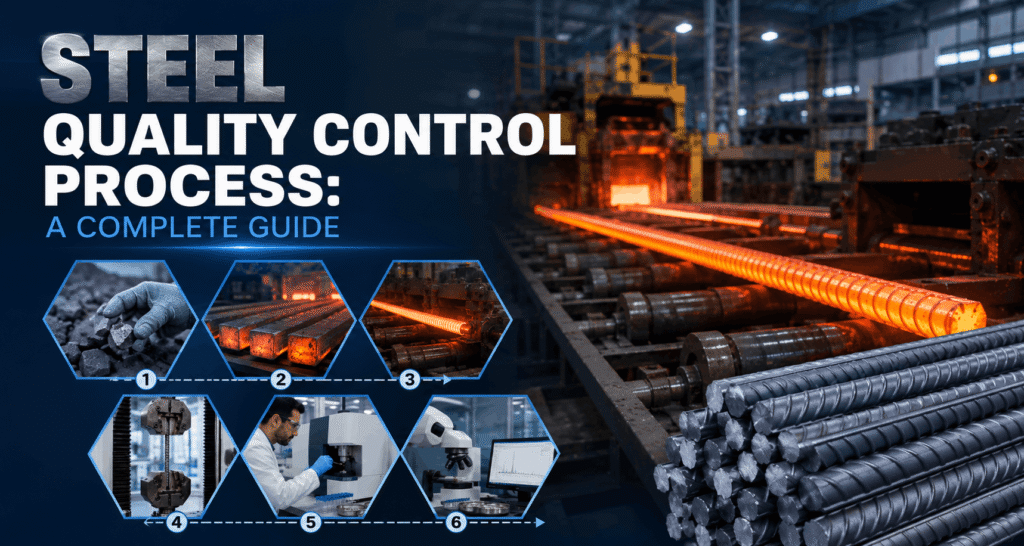
The steel quality control process is essential for producing steel that is strong, durable, and safe for construction. From inspecting raw materials to testing the finished product, every stage is carefully monitored to ensure consistent quality and reliable performance.
Effective quality control in steel manufacturing helps reduce defects, improve product consistency, and ensure steel performs well in buildings, bridges, and other infrastructure projects. For every steel manufacturing company, maintaining strict quality standards is key to delivering products customers can trust.
In this guide, we’ll walk through each step of the steel quality control process and explain how manufacturers produce high-quality steel for modern construction.
What Is Quality Control in Steel Manufacturing?
Quality control in steel manufacturing is the process of inspecting and testing steel at every stage of production to ensure it meets the required quality, strength, and performance standards. It starts with raw material inspection and continues until the finished products are ready for dispatch.
The main goal of quality control is to detect defects early, maintain consistent product quality, and ensure every batch is safe and reliable for construction use.
While Quality Control (QC) focuses on inspecting and testing finished products, Quality Assurance (QA) focuses on improving the manufacturing process to prevent defects from occurring in the first place.
Quality Assurance (QA) focuses on developing systems, procedures, and manufacturing processes that prevent defects from occurring. It emphasizes planning, documentation, and process improvement.
Quality Control (QC) focuses on inspecting products during and after production to verify they meet established specifications. It involves testing, measurements, inspections, and corrective actions whenever deviations are detected.
Together, QA and QC help manufacturers produce reliable steel products while maintaining consistent quality standards.
Every professional steel manufacturing company follows structured quality control procedures because construction projects depend on steel that performs consistently under heavy loads and challenging environmental conditions. These inspections ensure that finished products possess the required strength, dimensional accuracy, and durability before being supplied to customers.
Why Quality Control Matters
Quality control is essential because steel forms the structural foundation of buildings, bridges, highways, industrial plants, and other critical infrastructure. Even minor manufacturing defects can significantly affect structural performance over time.
Some of the most important reasons why quality control matters include:
- Ensures Structural Strength
Construction steel must withstand significant loads throughout its service life. Regular inspections and testing verify that steel products achieve the required mechanical properties, allowing structures to perform safely under design conditions.
- Maintains Product Consistency
Every batch of steel should deliver the same level of quality and performance. Continuous monitoring throughout manufacturing helps ensure uniform dimensions, strength, and chemical composition, reducing variations between production lots.
- Reduces Manufacturing Defects
Early detection of defects allows manufacturers to correct problems before products reach customers. This minimizes production losses while improving manufacturing efficiency.
- Meets Industry Requirements
Quality control helps manufacturers consistently produce steel that satisfies customer specifications and accepted manufacturing practices. Reliable testing and inspection procedures also support quality documentation throughout production.
- Builds Customer Trust
Contractors, engineers, and developers rely on manufacturers that consistently deliver dependable products. Strong quality control practices demonstrate a commitment to producing reliable construction materials and help establish long-term customer confidence.
Many Local Steel Manufacturers continue to invest in improved inspection technologies because consistent quality has become a key factor in today’s competitive construction industry.
Step 1: Raw Material Inspection
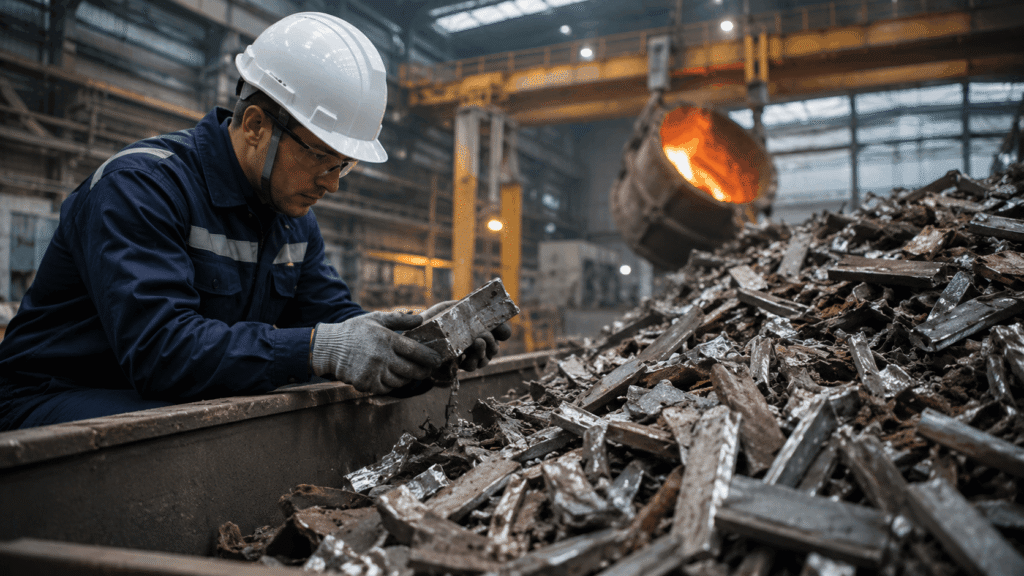
Every effective steel quality control process begins with careful inspection of incoming raw materials. The quality of finished steel depends heavily on the materials introduced into the manufacturing process. Even advanced production equipment cannot compensate for poor-quality raw materials.
Inspection of Scrap Steel and Raw Materials
Manufacturers carefully inspect incoming scrap steel, iron-bearing materials, and other raw inputs before production begins. Visual inspections help identify contamination, excessive rust, unwanted coatings, or foreign materials that could negatively affect the melting process.
Only suitable raw materials are approved for production, while unsuitable materials are removed to prevent quality issues later in manufacturing.
Chemical Composition Verification
Chemical analysis is performed to verify that raw materials contain the appropriate elements required for steel production. Manufacturers evaluate the composition before melting to ensure the final product can achieve the desired mechanical properties.
Accurate chemical verification also helps manufacturers produce different Steel Grades while maintaining consistency throughout production.
Removing Contaminated or Low-Quality Materials
Contaminated materials containing excessive impurities may reduce strength, increase brittleness, or create defects in finished products. Quality control teams identify and separate these materials before they enter production.
Using clean raw materials significantly improves process stability while supporting the production of high quality billets, which serve as the foundation for manufacturing reliable steel products.
A thorough raw material inspection reduces the likelihood of defects during later manufacturing stages and contributes to higher overall product quality.
Step 2: Monitoring During Steel Production
Once raw materials enter the furnace, continuous monitoring becomes essential. Maintaining precise production conditions helps ensure that steel develops the required physical and chemical characteristics throughout manufacturing.
Modern steel plants monitor several critical process parameters to maintain consistent product quality.
Monitoring Temperature During Melting
Temperature directly influences the melting process and the formation of steel. Manufacturers carefully monitor furnace temperatures throughout production to ensure materials melt uniformly and achieve the desired metallurgical characteristics.
Maintaining stable temperatures helps improve process consistency while reducing the possibility of manufacturing defects.
Chemical Composition Control
As melting progresses, manufacturers continuously evaluate the chemical composition of molten steel. Adjustments may be made during production to maintain the desired balance of carbon and other alloying elements.
This ongoing monitoring helps ensure the finished steel possesses the intended strength, ductility, and durability required for construction applications.
Process Monitoring to Maintain Consistency
Quality control personnel continuously monitor production parameters, equipment performance, and manufacturing conditions throughout the process.
By identifying process variations early, manufacturers can implement corrective actions before defects develop. Continuous monitoring improves production efficiency while maintaining consistent quality across every batch.
Step 3: Testing Steel Billets
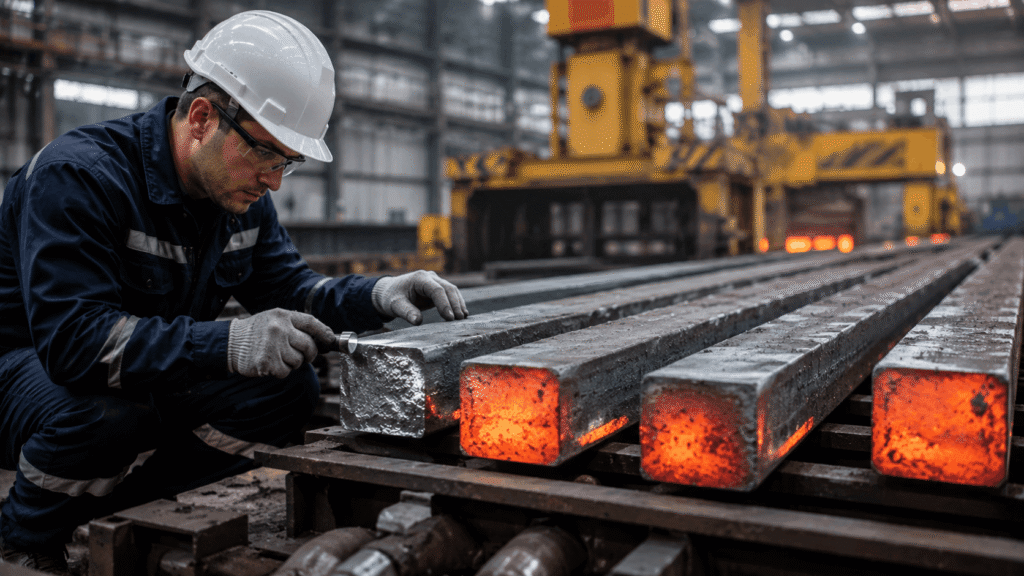
After steel solidifies into billets, another important stage of steel quality testing begins. Billets act as the intermediate product that will later be rolled into finished steel products. Any defects detected at this stage can be corrected before further processing.
Visual Inspection
Quality inspectors carefully examine billets for visible defects such as cracks, cavities, scale, or surface irregularities. Early identification prevents defective billets from progressing through the rolling process.
Surface Defect Inspection
Billet surfaces are inspected to identify imperfections that may affect the appearance or structural performance of finished steel products.
Removing defective billets at this stage reduces waste and helps maintain consistent product quality.
Dimensional Accuracy
Inspectors verify billet dimensions to ensure they meet production requirements. Accurate dimensions are essential because variations can affect rolling performance and the quality of finished products.
Consistent billet sizing also contributes to efficient manufacturing and improved production control.
Internal Quality Checks Before Rolling
In addition to external inspections, manufacturers perform internal quality evaluations to identify defects that may not be visible on the surface. These checks help ensure billets possess the structural integrity required for subsequent rolling operations.
Only billets that successfully pass inspection move to the next manufacturing stage, where they are transformed into finished construction steel products.
By performing comprehensive billet inspections, manufacturers reduce production risks, improve consistency, and strengthen the overall quality control in steel mills, ensuring reliable steel products for demanding construction applications.
Step 4: Quality Checks During Rolling
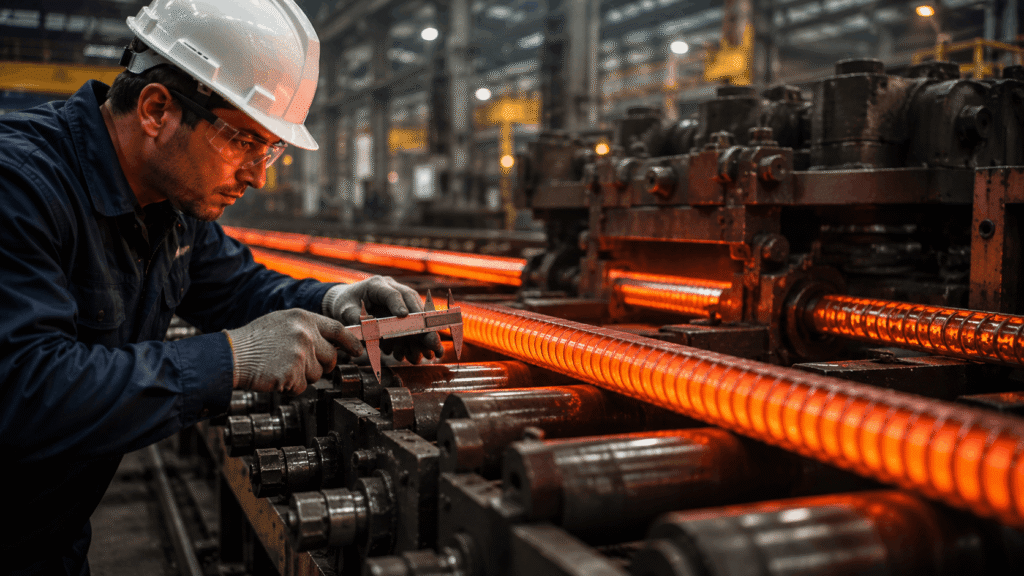
Once steel billets pass inspection, they move to the rolling mill, where they are transformed into finished products such as steel rebar and structural sections. This stage is critical because even small deviations in the rolling process can affect the dimensions, strength, and overall performance of the finished product.
To maintain consistency, manufacturers conduct multiple inspections throughout the rolling process.
Diameter Verification
One of the most important quality checks is verifying the diameter of the rolled steel bars. Accurate dimensions ensure compatibility with engineering designs and construction requirements.
Inspectors use precision measuring instruments to confirm that the diameter remains within acceptable tolerances throughout production. Consistent sizing also improves ease of installation and structural reliability.
Rib Pattern Inspection
For reinforcing steel bars, the rib pattern plays a significant role in creating a strong bond between the concrete and the steel. Poorly formed ribs can reduce this bond, affecting the performance of reinforced concrete structures.
During quality inspections, manufacturers verify that rib patterns are uniform, properly formed, and consistent across the entire length of the bar.
Length and Shape Accuracy
Steel bars must be produced with consistent lengths and straightness to simplify handling and installation on construction sites.
Quality control teams inspect finished products for bends, twists, and dimensional variations that could create difficulties during fabrication or construction.
Surface Finish Inspection
The surface condition of finished steel is another important quality indicator. Inspectors check for visible defects such as scratches, seams, scale buildup, cracks, or other imperfections that may affect appearance or structural performance.
Only products that meet the required quality criteria continue to the next stage of the steel quality control process.
Step 5: Mechanical Testing of Steel Bars
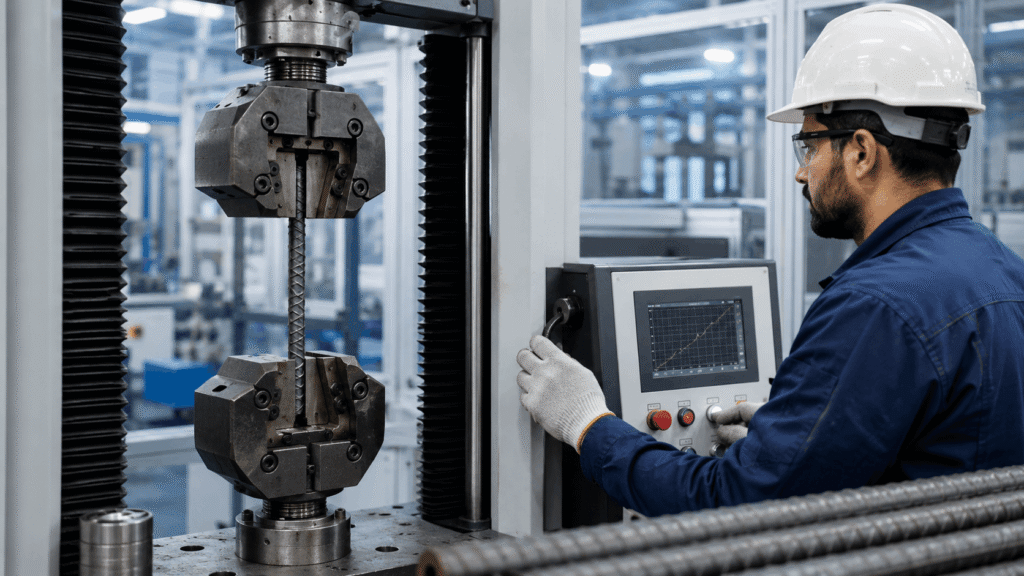
After rolling is complete, steel products undergo comprehensive mechanical testing to verify that they possess the strength and flexibility required for construction applications. These tests confirm that the manufacturing process has produced steel capable of performing safely under real-world loading conditions.
Mechanical testing is one of the most important stages of steel quality testing, providing measurable data about the physical properties of finished steel products.
Tensile Strength Test
The tensile strength test measures the maximum amount of force a steel bar can withstand before breaking.
During the test, a sample is placed in a universal testing machine and gradually stretched until failure occurs. The results help determine whether the steel has sufficient strength for structural applications.
High tensile strength enables steel to withstand heavy loads while maintaining the integrity of buildings, bridges, and other infrastructure.
Yield Strength Test
Yield strength represents the amount of stress steel can endure before it begins to deform permanently.
This property is especially important in construction because steel should retain its original shape under normal service loads. If yield strength is insufficient, structural members may experience permanent deformation before reaching their design limits.
Manufacturers verify yield strength to ensure the finished product performs reliably throughout its intended lifespan.
Bend Test
Construction steel should possess both strength and flexibility. The bend test evaluates the ability of a steel bar to bend without cracking or breaking.
During this test, steel samples are bent to a specified angle under controlled conditions. Successful completion demonstrates that the steel can tolerate fabrication processes and construction stresses without developing defects.
Re-Bend Test
The re-bend test further evaluates the ductility of steel after it has undergone initial deformation.
A steel sample is first bent, subjected to specified conditions, and then bent again in the opposite direction. This helps determine whether the material can maintain its structural integrity after repeated stress.
The re-bend test is particularly valuable for reinforcing bars used in demanding construction environments.
Why These Tests Are Essential for Construction Steel
Mechanical testing provides confidence that steel products will perform safely throughout the life of a structure. Together, tensile, yield, bend, and re-bend tests verify that steel possesses the necessary balance of strength and ductility.
For every reputable steel manufacturing company, these tests are an integral part of quality control because they help ensure finished products are suitable for residential, commercial, and industrial construction projects.
Step 6: Chemical Composition Testing
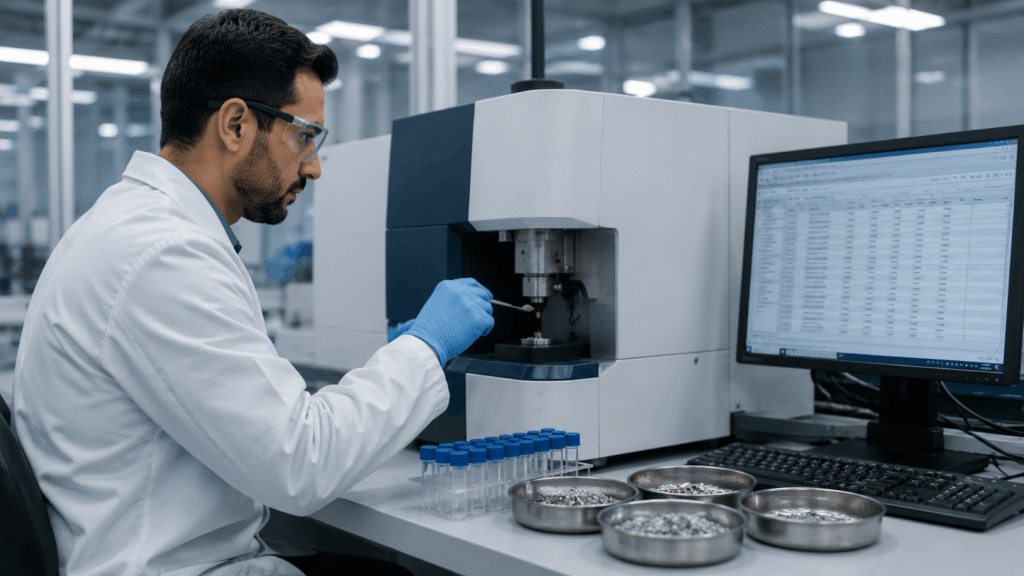
The mechanical performance of steel depends heavily on its chemical composition. Even slight variations in elemental content can significantly influence strength, weldability, ductility, corrosion resistance, and overall durability.
For this reason, manufacturers perform detailed chemical analysis as part of the quality control in the steel manufacturing process.
Carbon Content
Carbon is one of the most influential elements in steel production.
Higher carbon content generally increases hardness and strength, while lower carbon levels improve ductility and weldability. Maintaining the correct balance is essential because excessive carbon can make steel brittle, whereas insufficient carbon may reduce its strength.
Quality control laboratories verify carbon levels to ensure they remain within the intended production range.
Manganese and Other Alloying Elements
In addition to carbon, steel contains carefully controlled amounts of manganese and other alloying elements that influence its performance characteristics.
These elements contribute to improved strength, toughness, wear resistance, and manufacturing consistency. Their concentrations are monitored throughout production to ensure each batch achieves the desired mechanical properties.
Importance of Maintaining the Correct Composition
Consistent chemical composition helps manufacturers produce uniform steel products with predictable performance.
Accurate composition control also supports the production of different Steel Grades, allowing manufacturers to supply steel suitable for various structural and engineering applications.
Maintaining precise chemistry reduces production variability while improving the reliability and durability of finished steel products.
Step 7: Final Inspection Before Dispatch
Before steel products leave the manufacturing facility, they undergo one final round of inspections. This step confirms that every product delivered to customers meets established quality requirements and is ready for use in construction projects.
The final inspection serves as the last checkpoint in the steel quality control process.
Visual Quality Inspection
Inspectors conduct a thorough visual examination of finished products to identify any remaining surface defects, damage, or manufacturing irregularities.
Products that fail inspection are separated for further evaluation or corrective action, ensuring only approved materials are dispatched.
Product Identification and Labeling
Each bundle of steel is properly identified with relevant product information to support traceability throughout the supply chain.
Accurate labeling enables customers to verify product specifications while helping manufacturers maintain complete production records.
Bundling and Documentation
Finished steel products are bundled securely for safe transportation and handling.
Quality documentation prepared during manufacturing is reviewed to verify that all inspection and testing procedures have been successfully completed before shipment.
Final Approval Before Shipment
The final approval process confirms that every stage of inspection has been completed successfully.
Only products that satisfy all quality requirements receive authorization for dispatch, ensuring customers receive steel that meets the manufacturer’s quality expectations.
Industry Standards Followed for Steel Quality
Producing high-quality steel requires more than careful manufacturing. It also involves following recognized quality practices that ensure consistency, safety, and reliable performance.
Most manufacturers use established national and international testing methods to inspect steel throughout production. These inspections help verify product quality, reduce defects, and maintain consistent results.
When choosing a steel company in Pakistan, look for a manufacturer that prioritizes quality control, thorough testing, and continuous process improvement. A strong commitment to quality helps deliver dependable steel products for safe and long-lasting construction.
Common Defects Quality Control Prevents
An effective steel quality control process is designed to identify and eliminate defects before steel products reach construction sites. Detecting issues early not only improves manufacturing efficiency but also ensures that finished products deliver reliable performance throughout their service life.
Below are some of the most common defects that quality control procedures help prevent.
Surface Cracks
Surface cracks are among the most serious defects in steel products. They can develop due to improper processing, excessive cooling rates, or issues during rolling. Even small cracks can weaken the material and reduce its ability to withstand structural loads.
Routine visual inspections and process monitoring help identify cracked products before they are approved for dispatch.
Incorrect Dimensions
Steel products must meet precise dimensional requirements to ensure proper installation and structural performance. Variations in diameter, length, or shape can create problems during fabrication and construction.
Continuous measurements during rolling and final inspections help manufacturers maintain consistent product dimensions across every production batch.
Poor Rib Formation
For steel rebar, rib patterns are essential because they improve the bond between steel and concrete. Poorly formed or inconsistent ribs can reduce structural performance and affect the strength of reinforced concrete members.
Quality inspections during rolling ensure that rib patterns remain uniform and comply with manufacturing specifications.
Inconsistent Strength
Construction projects require steel that performs consistently under heavy loads. Variations in mechanical properties can result from improper temperature control, inconsistent chemical composition, or production irregularities.
Mechanical testing, including tensile, yield, bend, and re-bend tests, helps verify that every batch delivers dependable performance.
Chemical Composition Defects
The chemical composition of steel directly influences its strength, ductility, weldability, and durability. Incorrect proportions of carbon or other alloying elements can negatively affect product quality.
Regular laboratory analysis throughout production ensures the desired chemical balance is maintained, allowing manufacturers to consistently produce reliable steel products.
By preventing these defects, quality control in steel mills helps manufacturers reduce waste, improve production efficiency, and deliver steel products that meet the expectations of engineers, contractors, and developers.
Why Quality Control Is Important for Construction Projects
Construction projects depend on materials that can perform safely for decades. Whether used in residential buildings, commercial developments, industrial facilities, or infrastructure projects, steel must maintain its strength and reliability throughout its service life.
This is why quality control in steel manufacturing is essential.
Better Structural Safety
The primary purpose of quality control is to ensure that steel products meet the required mechanical and chemical properties before they are used in construction.
Properly tested steel provides engineers with confidence that structural components will perform as intended under design loads, reducing the risk of premature failure.
Longer Building Lifespan
Buildings constructed with high-quality steel generally require fewer repairs related to structural materials over time. Consistent manufacturing quality helps maintain the integrity of the structure, contributing to a longer service life.
Reliable quality control also reduces the likelihood of hidden manufacturing defects that could affect long-term performance.
Improved Durability
Steel used in demanding environments must withstand repeated loading, environmental exposure, and daily operational stresses.
Through comprehensive steel quality testing, manufacturers verify that finished products possess the durability required for long-term construction applications.
Reliable Performance Under Heavy Loads
Modern structures are designed to withstand significant loads throughout their operational life. Steel with consistent mechanical properties helps distribute these loads safely and efficiently.
Manufacturers that invest in rigorous inspection procedures produce steel that performs reliably across a wide range of construction applications.
As construction standards continue to evolve, the role of Local Steel Manufacturers in maintaining strict quality control becomes increasingly important. Companies that prioritize quality inspections, process monitoring, and continuous improvement contribute to safer buildings and stronger infrastructure.
Conclusion
The steel quality control process ensures that every stage of manufacturing, from raw material inspection to final testing, is carefully monitored to produce strong, reliable, and durable steel products.
Effective quality control in steel manufacturing helps prevent defects, improves product consistency, and supports safer construction projects. When choosing a steel manufacturing company, it is important to select one that prioritizes strict quality control and delivers dependable products such as high quality billets and steel rebar for long-lasting structural performance.
