
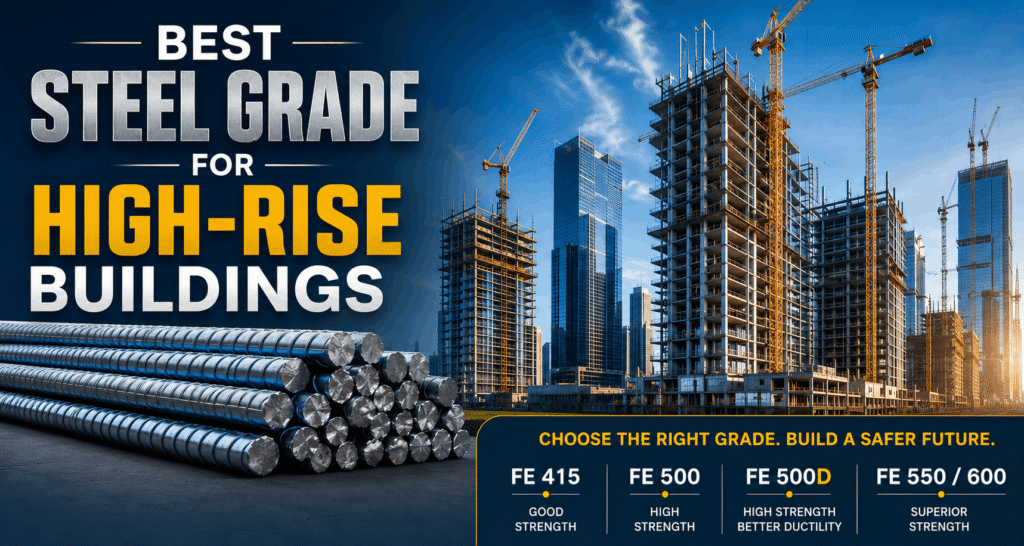
The success of any high-rise building depends heavily on the quality of materials used during construction. Among these materials, steel plays a critical role in providing structural strength, durability, and long-term safety. Choosing the right steel grade is one of the most important decisions engineers and builders make when planning a high-rise project.
Steel grades determine how much load a structure can withstand, how it performs under environmental stress, and how long it remains safe and reliable. Whether it is a residential tower, commercial complex, or industrial skyscraper, selecting the proper steel grade directly impacts the building’s performance.
In this guide, we will explore the most commonly used steel grades for high-rise buildings, compare their characteristics, and help you understand which option is best for your project.
Table of Contents
ToggleWhat Is a Steel Grade?
A steel grade is a classification system used to define the mechanical and chemical properties of steel. These grades help engineers and construction professionals select the most suitable material for specific applications.
Steel grades are generally categorized based on factors such as:
- Yield strength
- Tensile strength
- Ductility
- Chemical composition
- Corrosion resistance
Among these factors, yield strength is particularly important in construction. It indicates the maximum stress steel can withstand before it begins to deform permanently. Higher yield strength allows structures to support heavier loads while maintaining stability.
Related Article: Yield Strength vs Tensile Strength
Why Steel Grade Matters in High-Rise Buildings
High-rise buildings are exposed to various structural and environmental challenges. Choosing the appropriate steel grade helps ensure the building performs safely throughout its lifespan.
Load-Bearing Capacity
Tall buildings carry enormous vertical loads. Steel with sufficient strength ensures that columns, beams, and reinforcement bars can support these loads without failure.
Earthquake Resistance
In seismic zones, steel must possess adequate ductility to absorb and dissipate energy during earthquakes. Flexible steel reduces the risk of sudden structural collapse.
Wind Resistance
High-rise buildings experience significant wind pressure, especially at greater heights. Proper steel grades help structures withstand continuous lateral forces.
Long-Term Durability
Quality steel maintains its strength and performance over decades, reducing maintenance costs and improving overall reliability.
Safety and Structural Stability
Using the correct steel grade enhances the overall safety of occupants while maintaining the structural integrity of the building.
Common Steel Grades Used in High-Rise Construction
Fe-415
Features
Fe-415 steel has a minimum yield strength of 415 MPa and is commonly used in residential and small commercial projects.
Suitable Applications
- Low-rise residential buildings
- Small commercial structures
- Basic infrastructure projects
Advantages
- Good flexibility
- Easy workability
- Cost-effective solution
Limitations
- Lower strength compared to modern grades
- Less suitable for very tall structures
Fe-500
Features
Fe-500 offers a minimum yield strength of 500 MPa and is one of the most widely used grades in modern construction.
Why It Is the Most Commonly Used Grade
The balance between strength, durability, and affordability makes Fe-500 a preferred choice for many construction projects.
Best Applications
- Residential towers
- Commercial buildings
- Multi-story construction projects
Many projects that utilize high-quality TMT Steel Bars rely on Fe-500 because of its proven performance and cost efficiency.
Fe-500D
Better Ductility
The “D” in Fe-500D stands for ductility. This grade offers improved flexibility while maintaining high strength.
Earthquake-Resistant Structures
Its enhanced ductility allows structures to absorb seismic energy more effectively, making it highly suitable for earthquake-prone regions.
High-Rise Construction Benefits
- Improved structural flexibility
- Better crack resistance
- Enhanced safety during seismic activity
- Excellent long-term performance
For many engineers, Fe-500D represents the ideal balance between strength and safety in high-rise construction.
Fe-550 and Fe-600
High-Strength Applications
These grades provide even greater yield strength and are often selected for specialized projects requiring superior load-bearing capacity.
Commercial and Industrial Projects
Fe-550 and Fe-600 are frequently used in:
- Mega infrastructure projects
- Industrial facilities
- Large commercial developments
- Super-tall buildings
When Engineers Recommend These Grades
Engineers typically recommend higher grades when structural calculations require maximum strength while minimizing steel consumption.
Which Steel Grade Is Best for High-Rise Buildings?
Selecting the best steel grade depends on the specific requirements of the project.
| Steel Grade | Strength | Ductility | Recommended Use |
| Fe-500 | High | Moderate | General high-rise construction |
| Fe-500D | High | Excellent | High-rise and earthquake-resistant structures |
| Fe-600 | Very High | Lower | Specialized heavy-load applications |
In many cases, Fe-500D is considered the best option for high-rise buildings because it combines high strength with superior ductility. This combination enhances both structural performance and occupant safety.
However, the final choice should always be determined by structural engineers based on project-specific requirements.
Read in Detail: Fe-500 vs Fe-500D vs Fe-600
Factors to Consider Before Choosing a Steel Grade
Several factors influence the selection of construction steel.
Building Height
Taller buildings often require higher-strength steel to support increased loads.
Structural Design
Complex architectural designs may demand specific steel properties for optimal performance.
Local Building Codes
Compliance with regional regulations and safety standards is essential.
Environmental Conditions
Climate, humidity, and exposure to corrosive elements can affect steel performance.
Project Budget
Cost considerations must be balanced with long-term durability and safety.
Quality Certifications
Always choose certified steel that meets recognized industry standards.
Characteristics of High-Quality Construction Steel
Not all steel products offer the same level of quality. High-performance construction steel typically exhibits the following characteristics:
High Tensile Strength
Strong steel can withstand greater loads and stress.
Excellent Ductility
Flexible steel performs better under dynamic loading conditions.
Corrosion Resistance
Protection against rust increases service life and reduces maintenance requirements.
Consistent Chemical Composition
Uniform quality ensures predictable structural performance.
Reliable Manufacturing Process
Working with an experienced steel manufacturer ensures consistent product quality and adherence to industry standards.
Common Mistakes to Avoid When Selecting Steel
Choosing Steel Based Only on Price
Lower-cost materials may compromise safety and durability.
Ignoring Quality Certifications
Certified products provide assurance of compliance and performance.
Buying from Unreliable Suppliers
Always source materials from reputable manufacturers with a proven track record.
Not Consulting Structural Engineers
Professional guidance helps ensure proper material selection.
Using the Wrong Grade for the Project
Every project has unique structural requirements that must be considered carefully.
How to Identify Quality Steel
Selecting high-quality steel requires proper evaluation.
Check Manufacturer Certifications
Verify compliance with national and international standards.
Look for Proper Markings
Quality steel products include grade markings and identification details.
Verify Test Reports
Review laboratory testing results to confirm performance specifications.
Buy from Trusted Steel Manufacturers
Partnering with the best steel company in Pakistan can help ensure reliable quality and consistent supply.
Inspect Surface Quality and Dimensions
Check for visible defects, dimensional accuracy, and proper finishing.
Why Choosing the Right Steel Manufacturer Matters
The quality of steel depends not only on the grade but also on the manufacturer producing it.
Consistent Quality
Reliable manufacturers maintain strict quality standards throughout production.
Modern Manufacturing Process
Advanced production technologies improve steel performance and consistency.
Quality Control
Comprehensive testing ensures every batch meets required specifications.
Reliable Supply Chain
Timely delivery helps keep construction projects on schedule.
Better Construction Safety
High-quality steel significantly improves structural reliability and occupant safety.
Understanding industry trends, including Steel Rate Fluctuation and the Challenges Faced by Steel Manufacturers, can also help project owners make informed purchasing decisions.
Additionally, when comparing materials for specific applications, it is useful to understand the differences between Carbon Steel vs Stainless Steel to ensure the right material is selected for each project requirement.
Conclusion
Choosing the right steel grade is one of the most critical decisions in high-rise construction. The selected grade directly impacts structural strength, safety, earthquake resistance, durability, and long-term performance.
While Fe-500 remains a popular choice for many projects, Fe-500D is often preferred for high-rise buildings due to its excellent combination of strength and ductility. Higher grades such as Fe-550 and Fe-600 may be recommended for specialized applications requiring exceptional load-bearing capacity.
Most importantly, builders should invest in certified, high-quality steel sourced from a trusted steel manufacturer. By prioritizing quality over short-term savings, developers can ensure safer, stronger, and more durable structures that stand the test of time.
