
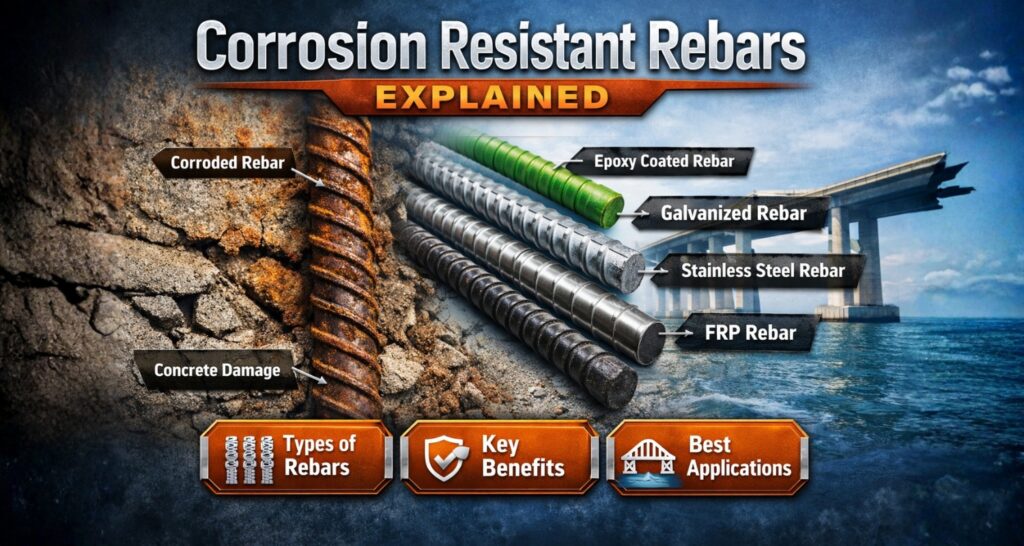
Corrosion is one of the biggest threats to reinforced concrete structures. Whether it’s bridges, buildings, or marine structures, steel reinforcement can deteriorate over time due to moisture, chemicals, and environmental exposure. This is where corrosion resistant rebars play a critical role.
In this guide, you’ll understand what corrosion resistant rebars are, their types, benefits, and where they should be used.
Table of Contents
ToggleWhat Are Corrosion Resistant Rebars?
Corrosion resistant rebars are specially treated or alloyed steel bars designed to resist rust and degradation caused by environmental exposure. Unlike conventional steel rebars, these are engineered to extend the lifespan of concrete structures.
They are commonly used in:
- Coastal construction
- Industrial zones
- Bridges and highways
- Water treatment plants
Why Do Rebars Corrode?
Before jumping into solutions, understand the problem.
Rebar corrosion happens due to:
- Moisture penetration
- Chloride exposure (sea water, salts)
- Carbonation of concrete
- Poor construction practices
When steel corrodes, it expands, leading to:
- Cracks in concrete
- Structural weakening
- Reduced lifespan
Types of Corrosion Resistant Rebars
1. Epoxy Coated Rebars
These rebars are coated with a protective epoxy layer that prevents moisture and chemicals from reaching the steel.
Pros:
- Cost-effective
- Widely used
- Good resistance in mild environments
Cons:
- Coating can get damaged during handling
2. Galvanized Rebars
These are coated with zinc, which acts as a sacrificial layer to protect the steel.
Pros:
- Better durability than epoxy
- Good for humid environments
Cons:
- More expensive than epoxy
3. Stainless Steel Rebars
Made entirely from corrosion-resistant steel alloys.
Pros:
- Extremely durable
- Long lifespan (50+ years)
- Best for harsh conditions
Cons:
- Very expensive
4. Fiber Reinforced Polymer (FRP) Rebars
Non-metallic rebars made from composite materials.
Pros:
- Zero corrosion
- Lightweight
- High strength
Cons:
- Different structural behavior than steel
- Higher initial cost
Also Read This: Deformed vs Plain Bars – Structural Difference
Benefits of Corrosion Resistant Rebars
Using corrosion resistant rebars is not just about durability—it’s about long-term cost efficiency.
Key Advantages:
- Extended structure lifespan
- Reduced maintenance costs
- Improved safety
- Better performance in aggressive environments
- Higher ROI in long-term projects
Applications in Pakistan
In Pakistan, corrosion resistant rebars are becoming increasingly important due to:
- Coastal areas like Karachi
- High humidity regions
- Industrial pollution exposure
When selecting materials, always consider top steel brands in pakistan to ensure quality and compliance with standards.
Additionally, sourcing from reliable steel mills in Pakistan ensures consistency, strength, and proper treatment of rebars.
When Should You Use Corrosion Resistant Rebars?
Use them when:
- Structure is exposed to water or chemicals
- Long lifespan (30–100 years) is required
- Maintenance access is limited
- Safety is critical
Avoid using regular rebars in:
- Marine environments
- Underground water-exposed foundations
- Chemical plants
Cost vs Value Analysis
Many people ask:
“Are corrosion resistant rebars worth it?”
Short answer: Yes — if used in the right place.
| Factor | Regular Rebar | Corrosion Resistant Rebar |
| Initial Cost | Low | High |
| Maintenance | High | Low |
| Lifespan | Medium | Very High |
| Risk | High | Low |
In long-term projects, they save money by reducing repairs and failures.
Frequently Asked Questions
1. Are corrosion resistant rebars necessary?
Not always—but essential in harsh environments.
2. Which type is best?
- Epoxy → budget projects
- Galvanized → moderate durability
- Stainless steel → premium, long-term
3. Do they increase construction cost?
Yes initially, but reduce lifecycle cost.
4. Can they completely prevent rust?
No material is 100% immune, but they significantly delay corrosion.
Also Read This: Rebar Spacing Rules in RCC Structures
Final Thoughts
If your idea is “use normal steel everywhere and save cost,” it’s weak.
Smart construction is about lifecycle performance, not just initial savings. Corrosion resistant rebars are not optional in many cases—they’re essential for durability, safety, and cost efficiency.
If you’re targeting serious projects, ignoring corrosion protection is a structural mistake.
