
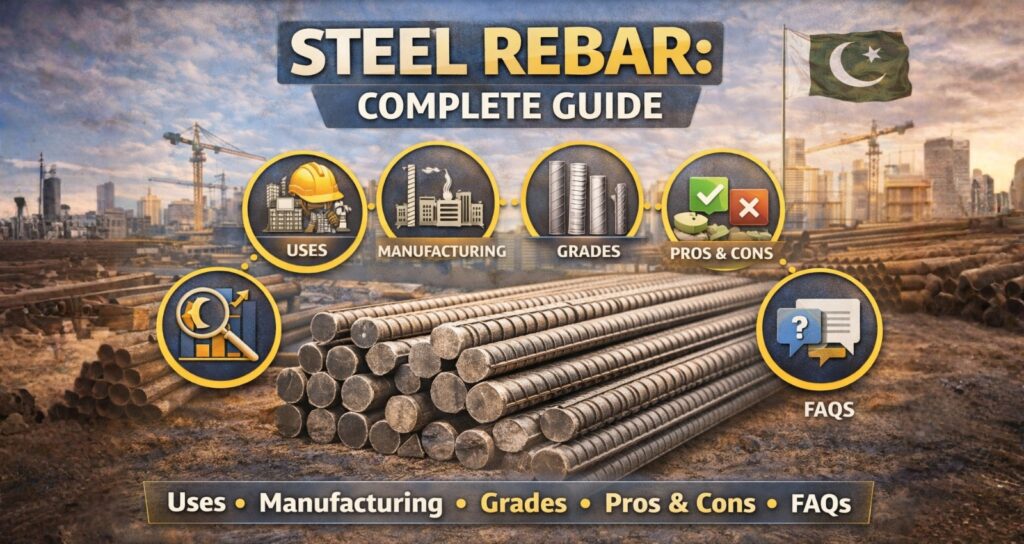
Steel rebar plays a critical role in modern construction. From small residential houses to massive bridges and skyscrapers, steel rebar provides the strength and durability that concrete alone cannot achieve. In this detailed guide, we will cover everything you need to know about steel rebar, including what it is, how it is made, where it is used, its disadvantages, grades, and frequently asked questions.
Table of Contents
ToggleWhat Is Steel Rebar?
Steel rebar, short for reinforcing bar, is a steel rod or mesh of steel wires used to reinforce concrete structures. Concrete is very strong in compression (when it is pushed), but it is weak in tension (when it is pulled or bent). Steel rebar is added inside concrete to improve its tensile strength.
Rebars usually have ridges or deformations on their surface. These ridges help the rebar bond tightly with the concrete, preventing slipping and ensuring the concrete and steel act together as a single strong structure.
Steel rebar is commonly made from carbon steel, but it can also be manufactured from stainless steel or other alloys, depending on the project requirements.
What Is Steel Rebar Used For?
Steel rebar is used in almost every type of concrete construction. Some common applications include:
1. Residential Construction
Steel rebar is used in:
- House foundations
- Columns and beams
- Slabs and floors
- Boundary walls
It ensures homes remain strong and stable for decades.
2. Commercial and Industrial Buildings
Large buildings like offices, malls, warehouses, and factories rely heavily on steel rebar to support heavy loads and resist structural stress.
3. Infrastructure Projects
Steel rebar is essential for:
- Bridges
- Roads and highways
- Dams
- Flyovers
- Tunnels
Without rebar, these structures would crack or fail under pressure.
4. Precast Concrete Products
Steel rebar is used in precast items such as:
- Concrete pipes
- Poles
- Panels
- Beams
How Steel Rebar Is Made
The manufacturing process of steel rebar involves several steps to ensure strength, flexibility, and durability.
Step 1: Raw Material Collection
Steel rebar is usually made from:
- Scrap steel
- Iron ore
Scrap steel recycling is very common and environmentally friendly.
Step 2: Melting
The raw material is melted in an electric arc furnace or blast furnace at extremely high temperatures.
Step 3: Casting
The molten steel is cast into billets or blooms. These semi-finished shapes are the base material for rebar production.
Step 4: Hot Rolling
The billets are heated again and passed through rolling mills. This process shapes the steel into long rods of specific diameters.
Step 5: Surface Deformation
Ridges or deformations are added to the surface to improve bonding with concrete.
Step 6: Cooling and Cutting
After rolling, the rebars are cooled, cut into standard lengths, and bundled for transportation.
Where Is Steel Rebar Made?
Steel rebar is manufactured globally in industrial steel mills, with major production centers in countries such as China, Pakistan, India, the United States, Turkey, and Russia. These mills melt scrap steel or iron ore into billets, which are then hot-rolled into ribbed steel bars designed to bond effectively with concrete.
Where to Buy Steel Rebar
Steel rebar can be purchased from multiple sources, depending on your project size.
1. Local Steel Suppliers
Most cities have steel markets or authorized dealers who sell different sizes and grades of rebar.
2. Steel Mills
For large construction projects, buying directly from steel mills is more cost-effective.
3. Construction Material Stores
Small projects often source rebar from local construction material shops.
4. Online Suppliers
In some regions, steel rebar is available through online platforms that offer delivery services.
Before purchasing, always check:
- Steel grade
- Diameter and length
- Certification and standards
What Are the Advantages of Steel Rebar?
Steel rebar offers many benefits that make it an essential material in reinforced concrete construction. These advantages improve the strength, durability, and overall performance of concrete structures.
1. High Tensile Strength
Concrete is strong in compression but weak in tension. Steel rebar provides high tensile strength, allowing concrete structures to resist bending, stretching, and cracking under heavy loads.
2. Increased Structural Durability
The use of steel rebar significantly increases the lifespan of concrete structures. Reinforced concrete buildings, bridges, and infrastructure remain stable and reliable for decades when proper rebar is used.
3. Strong Bond with Concrete
Deformed steel rebar has ridges on its surface that create a strong mechanical bond with concrete. This bonding prevents slippage and ensures that steel and concrete work together as a single unit.
4. High Load-Bearing Capacity
Steel rebar enables concrete to support heavy loads, making it ideal for high-rise buildings, bridges, highways, and industrial structures.
5. Thermal Compatibility
Steel and concrete have similar thermal expansion rates. This compatibility reduces the risk of cracking caused by temperature changes and improves overall structural stability.
6. Design Flexibility
Steel rebar can be easily cut, bent, and shaped to meet specific construction requirements. Certain grades can also be welded, giving engineers greater flexibility in complex structural designs.
7. Cost-Effective in the Long Term
Although steel rebar may have a higher initial cost, it reduces maintenance and repair expenses over time. This makes it a cost-effective reinforcement solution for long-term construction projects.
8. Improved Fire Resistance
When embedded within concrete, steel rebar is protected from direct exposure to fire. Reinforced concrete structures. Therefore offer better fire resistance compared to many other building materials.
9. Wide Availability
Steel rebar is widely available across the world in various sizes and grades. This makes sourcing and replacing rebar convenient for construction projects of all sizes.
10. Environmentally Friendly Material
Steel rebar is 100% recyclable and is often produced from recycled steel. This makes it an environmentally responsible choice that supports sustainable construction practices.
What Are the Disadvantages of Steel Rebar?
Although steel rebar is extremely useful, it also has some disadvantages:
1. Corrosion (Rusting)
Steel rebar can rust when exposed to moisture and oxygen. Rust expands and can cause concrete cracking over time.
2. Weight
Steel rebar is heavy, which increases transportation and labor costs.
3. Cost Fluctuation
Steel prices change frequently due to market demand and raw material availability.
4. Requires Skilled Labor
Proper placement, spacing, and tying of rebar require trained workers to avoid structural issues.
What Steel Grade Is Rebar?
Steel rebar comes in different grades, which indicate strength and composition. Common rebar grades include:
Grade 40
- Yield strength: 40,000 psi
- Used in light construction and residential projects
Grade 60
- Yield strength: 60,000 psi
- Most commonly used grade worldwide
Grade 75
- Higher strength
- Used in heavy infrastructure and high-load structures
Grade 500 / Grade 550
These grades are commonly used in many countries and follow metric standards.
Choosing the right grade depends on:
- Load requirements
- Environmental conditions
- Local building codes
Additional Important Information About Steel Rebar
Types of Steel Rebar
- Plain rebar
- Deformed rebar
- Epoxy-coated rebar
- Stainless steel rebar
Sizes of Steel Rebar
Steel rebar is available in various diameters, commonly ranging from:
- 8 mm to 40 mm
The size selection depends on structural design and load calculations.
Frequently Asked Questions (FAQs)
Will Steel Rebar Rust?
Yes, steel rebar can rust when exposed to moisture and air. However, when properly embedded in concrete with adequate cover, the risk of rust is greatly reduced. Epoxy-coated and stainless steel rebars are used in high-moisture environments.
Can You Weld Steel Rebar?
Yes, steel rebar can be welded, but not all grades are suitable for welding. Low-carbon steel rebars are easier to weld. Welding should be performed by professionals, following proper standards, to prevent weakening the steel.
How to Bend Steel Rebar?
Steel rebar can be bent using:
- Manual rebar benders (for small diameters)
- Mechanical bending machines (for larger bars)
Always bend rebar according to design specifications to prevent cracks or loss of strength.
Is Steel Rebar Better Than Fiber Reinforcement?
Steel rebar provides higher tensile strength and load-bearing capacity. Fiber reinforcement helps control cracking but cannot fully replace steel rebar in structural applications.
How Long Does Steel Rebar Last?
When properly installed and protected within concrete, steel rebar can last 50 to 100 years or more.
Can Steel Rebar Be Recycled?
Yes, steel rebar is 100% recyclable and is one of the most recycled construction materials in the world.
Conclusion
Steel rebar is an essential material in modern construction. It strengthens concrete, improves durability, and ensures the safety of buildings and infrastructure. Understanding what steel rebar is, how it is made, where to buy it, and which grade to choose can help you make informed decisions for your construction projects.
By selecting the right type and grade of steel rebar and following proper installation practices, you can significantly increase the lifespan and reliability of any concrete structure.
