
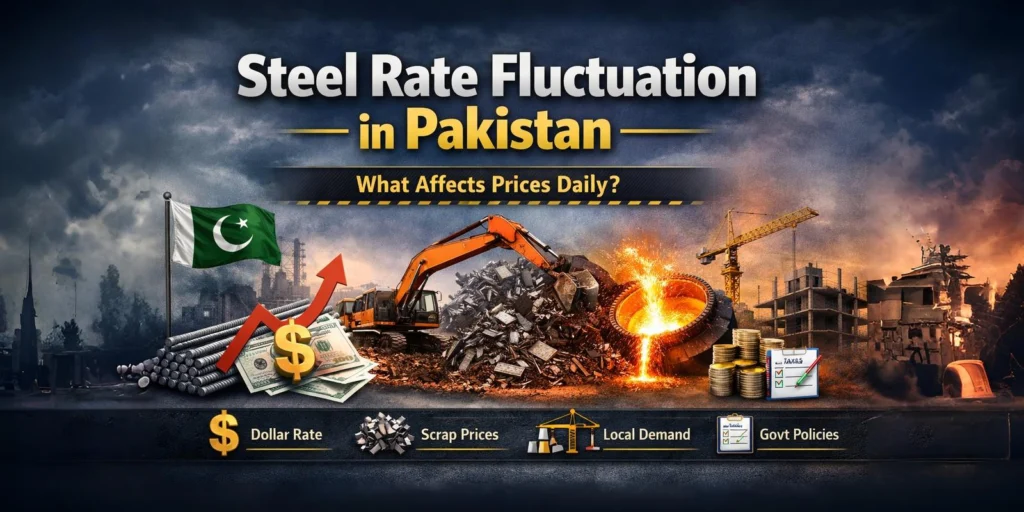
Steel prices in Pakistan don’t stay the same for long. If you are a contractor, builder, supplier, or even planning to build your own house, you probably check steel rates almost daily. Sometimes prices jump suddenly, and other times they drop without much warning.
Table of Contents
ToggleBut why does this happen?
Let’s break it down in simple, easy-to-understand language.
Why Steel Prices Change So Frequently
Steel is not just a local product. Its pricing depends on both local market conditions and global economic factors. Even small changes in international markets can impact the steel rate in Pakistan within days.
Here are the main reasons behind daily fluctuations:
1. Dollar Rate (Exchange Rate Impact)
One of the biggest reasons for steel price fluctuation in Pakistan is the USD to PKR exchange rate.
- Pakistan imports raw materials like scrap and iron ore.
- When the dollar rate increases, import costs rise.
- Higher import costs directly increase steel production costs.
- Result: Steel rates go up.
Even a small change in the dollar rate can impact per-ton steel pricing significantly.
2. International Scrap Prices
Steel manufacturers in Pakistan heavily rely on imported scrap metal.
When global scrap prices:
- Increase → Local steel rates increase.
- Decrease → Local steel rates may reduce (with some delay).
Countries like Turkey and other large scrap buyers influence global scrap pricing, which eventually affects Pakistan’s market.
3. Demand & Supply in the Local Market
Like any other product, steel follows the basic rule:
High Demand + Low Supply = Higher Prices
Demand increases during:
- Construction season
- Large infrastructure projects
- Government development projects
If demand rises suddenly and production doesn’t match it, prices increase.
4. Government Policies & Taxes
Government decisions also play a major role.
These include:
- Import duties
- Regulatory duties
- Sales tax changes
- Energy tariffs
- Federal budget announcements
Even rumors about new taxes can temporarily increase steel rates due to market uncertainty.
5. Fuel & Electricity Costs
Steel production requires heavy machinery and high energy consumption.
If:
- Electricity tariffs increase
- Gas prices increase
- Fuel prices increase
Production cost rises — and manufacturers adjust steel rates accordingly.
6. Transportation Costs
Steel is bulky and heavy. Transporting it from factory to dealer adds cost.
If:
- Diesel prices increase
- Logistics costs rise
Market rates also increase to cover these additional expenses.
7. Market Speculation & Dealer Behavior
Sometimes, prices fluctuate not just because of cost — but because of market expectations.
If dealers expect:
- Dollar rate to increase
- Scrap prices to rise
- New taxes to be announced
They may temporarily increase prices in anticipation.
How Often Do Steel Rates Change?
In Pakistan, steel rates can change:
- Daily
- Weekly
- Or even multiple times in a week
Large manufacturers often revise rates based on market conditions and raw material costs.
How Buyers Can Protect Themselves
If you are purchasing steel:
- Always confirm the latest rate before placing an order.
- Lock your rate if you are buying in bulk.
- Stay updated with dollar trends.
- Plan purchases strategically to avoid sudden spikes.
Final Thoughts
Steel rate fluctuation in Pakistan is completely normal — but it can feel unpredictable if you don’t understand the reasons behind it.
The main drivers are:
- Dollar rate
- International scrap prices
- Local demand
- Government policies
- Energy costs
If you stay informed about these factors, you can better plan your construction budget and avoid unnecessary surprises.
