
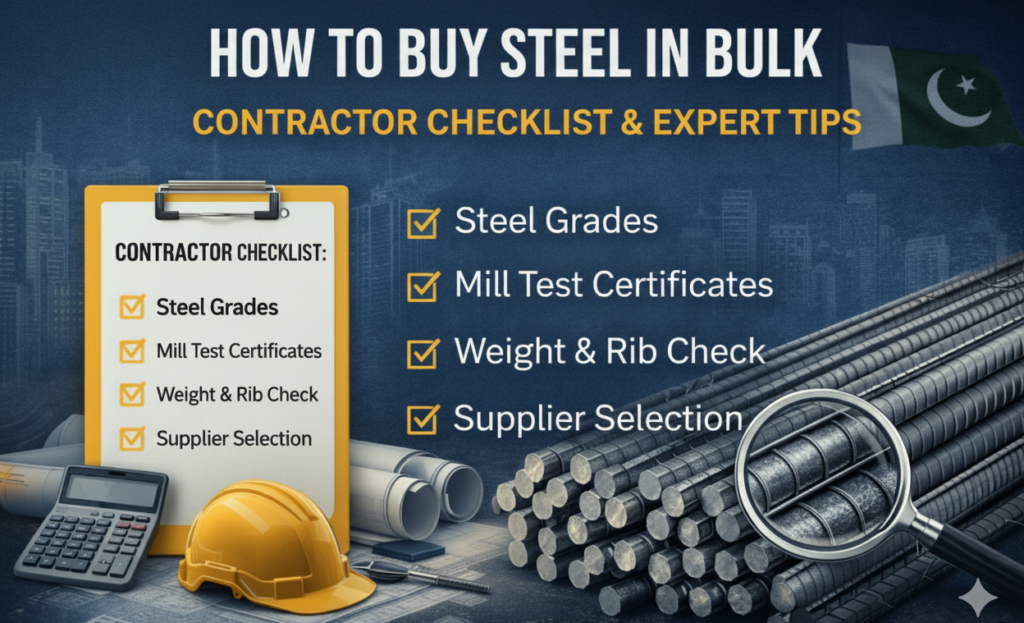
Introduction: Why a Steel Buying Checklist Matters
Buying steel in bulk is one of the most critical decisions a contractor or builder makes during a construction project. The quality, grade, and reliability of steel directly impact structural safety, project timelines, and overall costs.
Table of Contents
ToggleIn Pakistan, where construction conditions vary due to climate, seismic zones, and soil types, choosing the wrong steel can lead to serious long-term risks. This is why experienced contractors follow a clear checklist before purchasing steel in bulk, rather than relying only on price.
This guide breaks down everything contractors need to check before buying steel in bulk in Pakistan, explained in simple, practical terms.
1. Confirm the Steel Grade and Standard
Before discussing price or quantity, always verify which steel grade your project requires.
Common steel standards used in Pakistan include:
- ASTM A615 – General construction
- ASTM A706 – Earthquake-resistant and seismic zones
- BS 4449 (Grade 500) – High-strength structural projects
Each steel grade serves a different purpose in construction. For example, A706 steel offers better ductility and is preferred for earthquake-prone areas, while A615 is widely used in standard residential projects. That is why contractors must clearly understand steel grades used in construction before buying in bulk, to ensure the right grade is selected for each structural element.
Checklist Tip:
Never accept steel without clearly mentioned grade markings and mill test certificates.
2. Verify Mill Test Certificates (MTC)
A Mill Test Certificate is not a formality. It is proof of quality.
Always ask for:
- Chemical composition details
- Yield strength and tensile strength values
- Elongation percentage
- Heat number and batch traceability
If a supplier hesitates to provide MTCs, consider it a red flag.
Professional contractors never buy bulk steel without proper documentation.
3. Check Weight Accuracy (Per Ton Reality)
One of the most common issues in bulk steel buying is underweight material.
Steel bars may look fine visually, but if the actual weight per ton is less, you end up paying more for less material.
What to check:
- Actual weight vs claimed weight
- Standard diameter tolerances
- Consistency across bundles
Checklist Tip:
Buy from manufacturers known for accurate weight compliance, not just lower rates.
4. Inspect Rib Pattern and Bar Finish
Ribs on steel bars are not just cosmetic. They ensure proper bonding with concrete.
When inspecting steel:
- Ribs should be uniform and well-defined
- Surface should be free from excessive rust, cracks, or scaling
- Bars should be straight and properly rolled
Poor rib quality can weaken concrete grip and reduce structural performance.
5. Understand Project-Specific Requirements
Not all projects need the same type of steel.
Before bulk purchasing, ask:
- Is this residential, commercial, or infrastructure work?
- Is the area seismic-sensitive?
- Will the structure face coastal or humid conditions?
For example:
- High-rise buildings need higher ductility
- Coastal areas require steel with better corrosion resistance
- Infrastructure projects demand strict compliance with international standards
Matching steel to project conditions saves future repair costs and safety risks.
6. Evaluate the Manufacturer’s Credibility
Steel quality depends heavily on who manufactures it.
Check:
- Manufacturing facility and process
- Quality control systems
- Market reputation
- Consistency across batches
Established steel mills invest in modern rolling technology, testing labs, and controlled production, which directly reflects in product reliability. Most experienced contractors prefer working with local steel manufacturers because of better quality control, faster supply, and easier verification compared to imported material.
7. Consistent Supply & Delivery Capacity
Bulk projects cannot afford supply delays.
Before finalizing a supplier:
- Confirm monthly production capacity
- Ask about delivery timelines
- Ensure consistent availability of required sizes
Delays in steel delivery often result in idle labor, increased costs, and missed deadlines.
8. Price Transparency (Not Just Lowest Rate)
Low prices can be tempting, but they often hide:
- Underweight bars
- Inferior scrap material
- Missing certifications
Instead of asking “Who is cheapest?”, ask:
“Who offers the best value per ton with guaranteed quality?”
A slightly higher price with reliable quality often saves money in the long run.
9. After-Sales Support & Technical Guidance
Reliable steel suppliers don’t disappear after selling.
Good suppliers provide:
- Technical support for grade selection
- Documentation support for consultants
- Long-term supply coordination for large projects
This support becomes especially valuable in large commercial and infrastructure projects.
10. Final Bulk Steel Buying Checklist (Quick Summary)
Before placing a bulk steel order, confirm:
- Correct steel grade and standard
- Mill Test Certificates available
- Accurate weight per ton
- Uniform rib pattern and surface quality
- Manufacturer credibility
- Reliable supply and delivery schedule
- Transparent pricing
- Technical and after-sales support
Conclusion: Buy Steel Smart, Build Strong
Buying steel in bulk is not just a procurement task; it is a structural responsibility. Contractors who follow a proper checklist avoid costly mistakes, project delays, and safety risks.
By choosing certified, accurately weighed, and project-appropriate steel from trusted manufacturers, you ensure that your construction stands strong for decades, not just until completion.
A smart steel purchase today is a safer structure tomorrow.
