
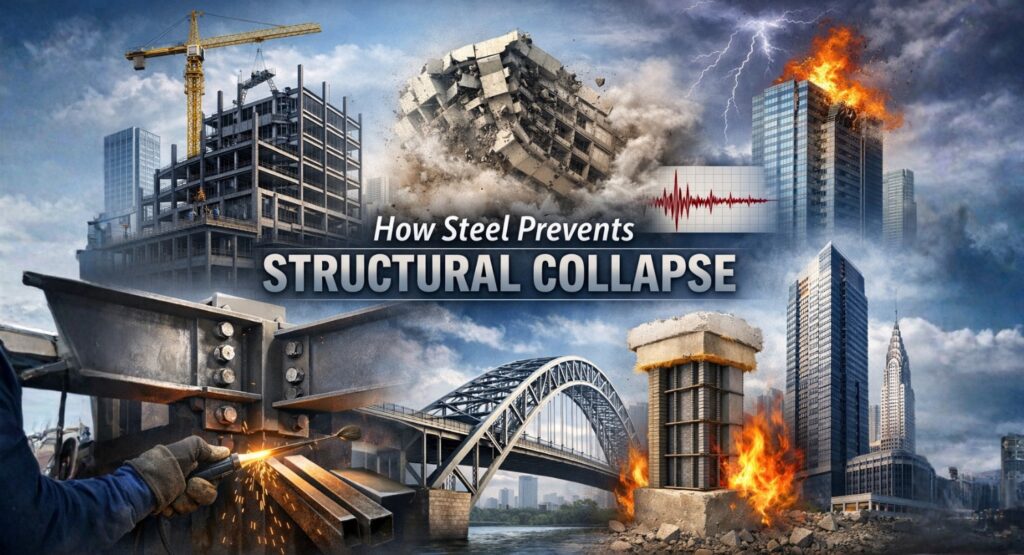
Structural collapse is one of the most serious failures in construction engineering. When a building collapses, the cause is usually related to weak structural systems, poor material choice, design flaws, or excessive load. One of the primary materials used to prevent such catastrophic failures is structural steel.
Table of Contents
ToggleSteel has become the backbone of modern infrastructure because of its high strength, flexibility, and reliability. From skyscrapers and bridges to industrial facilities, steel plays a critical role in ensuring buildings remain stable under various loads and environmental conditions.
This article explains how steel prevents structural collapse, the engineering principles behind it, and why it remains the preferred material in modern construction.
What Is Structural Collapse?
Structural collapse occurs when a building or structure loses its ability to support loads. This can happen due to:
- Excessive weight or load
- Weak construction materials
- Design or engineering errors
- Environmental factors such as earthquakes, wind, or fire
- Foundation failure
When one part of a structure fails, it can trigger a progressive collapse, where the failure spreads throughout the building.
Preventing this requires strong materials and intelligent structural design — which is where steel becomes essential.
Key Properties of Steel That Prevent Structural Collapse
Steel has several physical and mechanical properties that make it highly effective for structural support.
1. High Strength-to-Weight Ratio
Steel provides exceptional strength while remaining relatively lightweight compared to other construction materials.
This allows engineers to design structures that can support heavy loads without excessive material weight. Because steel can carry large loads with smaller cross-sections, it reduces stress on foundations and supporting elements.
As a result, buildings remain stable even when subjected to heavy equipment, occupants, or environmental forces.
2. Ductility and Flexibility
One of the most important characteristics of steel is ductility.
Ductility means the material can bend or deform without suddenly breaking. This property is extremely important during earthquakes, high winds, or sudden impact forces.
Instead of collapsing instantly, steel structures:
- Bend
- Absorb energy
- Redistribute forces
This gives the structure time to stabilize and prevents sudden catastrophic failure.
3. Load Distribution Capability
Steel structures are designed using beams, columns, and trusses that efficiently distribute loads across the entire framework.
Key structural components include:
- Steel beams – carry horizontal loads
- Steel columns – transfer loads vertically
- Steel trusses – distribute forces across large spans
By distributing loads across multiple elements, steel prevents localized failure, which is a common cause of structural collapse.
4. Resistance to Environmental Forces
Buildings must withstand various external forces such as:
- Strong winds
- Earthquakes
- Heavy snow loads
- Dynamic loads from traffic or machinery
Steel performs well under these conditions because of its elasticity and strength.
In earthquake-prone areas, steel structures are preferred because they can absorb seismic energy and flex rather than crack.
5. Fire Resistance with Proper Protection
While steel can weaken under extremely high temperatures, modern construction uses several fire-protection methods:
- Fire-resistant coatings
- Concrete encasement
- Fireproof insulation materials
These protections help maintain the structural integrity of steel during fires, reducing the risk of collapse.
Steel in Modern Structural Systems
Structural engineers integrate steel into many building systems, including:
Steel Frame Structures
Steel frames form the skeleton of modern buildings. The frame supports the entire load and transfers it safely to the foundation.
Benefits include:
- High load capacity
- Faster construction
- Improved safety
Reinforced Concrete with Steel
Steel reinforcement bars (rebar) are embedded inside concrete to increase tensile strength.
Concrete is strong in compression, while steel is strong in tension. Together they create a highly stable structural system.
Steel Bracing Systems
Bracing systems provide additional stability to structures, especially in tall buildings.
Common bracing systems include:
- Cross bracing
- K-bracing
- Chevron bracing
These systems prevent lateral movement caused by wind or seismic forces.
Why Engineers Prefer Steel for Safety
Structural engineers prefer steel because it offers predictable performance and reliability.
Advantages include:
- Consistent manufacturing quality
- Precise engineering calculations
- Long structural lifespan
- Ability to withstand dynamic loads
- Ease of inspection and maintenance
These characteristics significantly reduce the risk of structural failure.
Real-World Applications of Steel in Preventing Collapse
Steel is used in numerous critical infrastructure projects, including:
- High-rise buildings
- Industrial warehouses
- Bridges
- Stadiums
- Airports
- Offshore structures
Many of the world’s tallest skyscrapers rely heavily on steel frameworks to maintain structural stability.
Best Practices for Using Steel in Construction
To maximize the safety benefits of steel, engineers follow strict construction practices:
- Accurate structural design and load calculations
- Use of certified structural steel materials
- Proper welding and bolting techniques
- Regular structural inspections
- Adequate fire protection systems
These practices ensure that steel structures perform reliably throughout their lifespan.
Conclusion
Steel plays a fundamental role in preventing structural collapse in modern construction. Its high strength, ductility, load distribution capability, and resilience to environmental forces make it one of the most reliable materials available to engineers.
By integrating steel into structural frameworks, buildings can safely withstand heavy loads, seismic activity, and other stresses that might otherwise cause catastrophic failure.
As construction technology continues to advance, steel will remain a key material in ensuring the safety, durability, and stability of buildings around the world.
Frequently Asked Questions (FAQ)
1. Why is steel used in construction instead of other materials?
Steel offers high strength, durability, and flexibility, making it ideal for supporting heavy loads and resisting environmental forces.
2. Can steel buildings collapse?
While any structure can fail due to poor design or extreme conditions, properly engineered steel structures are highly resistant to collapse.
3. Is steel stronger than concrete?
Steel has higher tensile strength than concrete, which is why steel reinforcement is commonly used inside concrete structures.
