
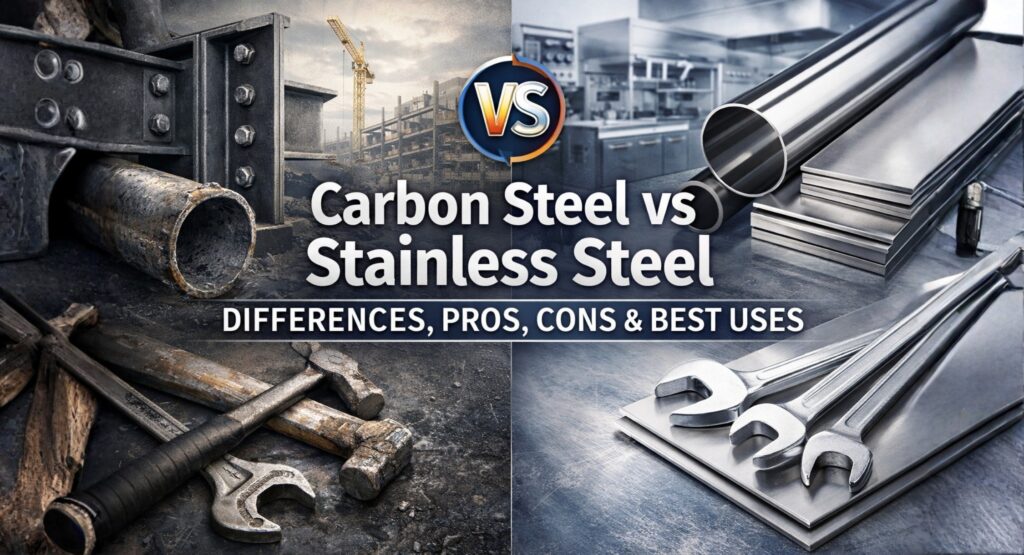
Steel is one of the most widely used materials in construction, manufacturing, and engineering. However, not all steel is the same. Two of the most common types are carbon steel and stainless steel.
Table of Contents
ToggleUnderstanding the difference between these materials is important because each type has unique properties that make it suitable for specific applications. Factors such as strength, corrosion resistance, durability, and cost influence which type of steel should be used.
This guide explains the key differences between carbon steel and stainless steel in simple terms so beginners, engineers, and buyers can make better decisions.
What is Carbon Steel?
Carbon steel is a type of steel where carbon is the primary alloying element. The carbon content usually ranges between 0.05% and 2.0%.
Higher carbon levels increase strength and hardness but can reduce flexibility.
Main Characteristics of Carbon Steel
- High strength and hardness
- Less corrosion resistant
- More affordable than stainless steel
- Easy to machine and shape
- Requires protective coatings to prevent rust
Because carbon steel does not contain chromium, it is more vulnerable to rust and corrosion, especially in humid or wet environments.
Common Uses of Carbon Steel
Carbon steel is widely used in:
- Construction structures
- Bridges and buildings
- Automotive parts
- Industrial machinery
- Tools and cutting equipment
Its strength and cost efficiency make it ideal for heavy-duty structural applications.
What is Stainless Steel?
Stainless steel is an alloy of steel that contains at least 10.5% chromium. Chromium reacts with oxygen in the air to form a thin protective layer called a passive oxide layer.
This layer prevents rust and corrosion.
Main Characteristics of Stainless Steel
- Excellent corrosion resistance
- Attractive and shiny appearance
- Lower maintenance requirements
- Strong and durable
- More expensive than carbon steel
Because of its resistance to rust, stainless steel performs well in moisture, chemicals, and extreme environments.
Common Uses of Stainless Steel
Stainless steel is commonly used in:
- Kitchen appliances and utensils
- Medical instruments
- Food processing equipment
- Chemical plants
- Marine environments
It is especially useful in industries where hygiene and corrosion resistance are critical.
Carbon Steel vs Stainless Steel: Key Differences
| Feature | Carbon Steel | Stainless Steel |
| Composition | Mostly iron and carbon | Iron, carbon, and chromium |
| Corrosion Resistance | Low | High |
| Strength | Very strong | Strong but slightly softer |
| Appearance | Dull or matte | Shiny and polished |
| Maintenance | Requires coating or paint | Low maintenance |
| Cost | Usually cheaper | More expensive |
These differences help determine which material works best for specific applications.
Which Steel is Stronger?
Carbon steel is generally stronger and harder because of its higher carbon content. This makes it ideal for structural applications and tools.
However, stainless steel offers better corrosion resistance, which makes it more reliable in environments exposed to moisture or chemicals.
Therefore, the choice between the two depends on the working conditions and project requirements.
When to Use Carbon Steel
Carbon steel is the better option when:
- High strength is required
- Cost needs to be minimized
- The environment is dry or controlled
- Protective coatings can be applied
Industries such as construction and heavy manufacturing commonly rely on carbon steel.
When to Use Stainless Steel
Stainless steel is preferred when:
- Corrosion resistance is critical
- Clean and hygienic surfaces are required
- The material is exposed to moisture or chemicals
- Long-term durability is needed
This is why stainless steel is widely used in medical, food, and marine industries.
Advantages and Disadvantages
Advantages of Carbon Steel
- Lower cost
- High tensile strength
- Good wear resistance
Disadvantages of Carbon Steel
- Prone to rust
- Requires coatings or maintenance
Advantages of Stainless Steel
- Excellent corrosion resistance
- Attractive appearance
- Low maintenance
Disadvantages of Stainless Steel
- Higher cost
- More difficult to machine in some cases
Conclusion
Both carbon steel and stainless steel are essential materials used across many industries. Carbon steel offers high strength and affordability, making it ideal for construction and structural applications. Stainless steel, on the other hand, provides excellent corrosion resistance and durability, making it suitable for environments where moisture and chemicals are present.
Choosing between these two materials depends on the specific needs of the project, environmental conditions, and budget.
Understanding these key differences helps engineers, manufacturers, and consumers select the most appropriate steel for their applications.
Frequently Asked Questions (FAQ)
Is carbon steel stronger than stainless steel?
Carbon steel is generally harder and stronger, but stainless steel provides better corrosion resistance.
Why does stainless steel not rust easily?
Stainless steel contains chromium, which forms a protective oxide layer that prevents rust.
Which steel is more expensive?
Stainless steel is usually more expensive because of the chromium content and corrosion-resistant properties.
Can carbon steel be made rust-resistant?
Yes. Carbon steel can be protected using coatings, paint, or galvanization.
