
Steel Rebars in Karachi
Steel rebars are the core of reinforced concrete construction in Karachi, where structures must withstand heavy loads, seismic activity, and long-term environmental stress. At A One Steel Mills, we manufacture high-quality steel rebars in Karachi that deliver superior strength, flexibility, and durability for residential, commercial, and infrastructure projects.
Builders and contractors across Karachi trust our steel rebars for reliable performance and compliance with international standards. With advanced manufacturing facilities and strict quality control, A One Steel Mills produces rebars designed for real site conditions, not just laboratory results.
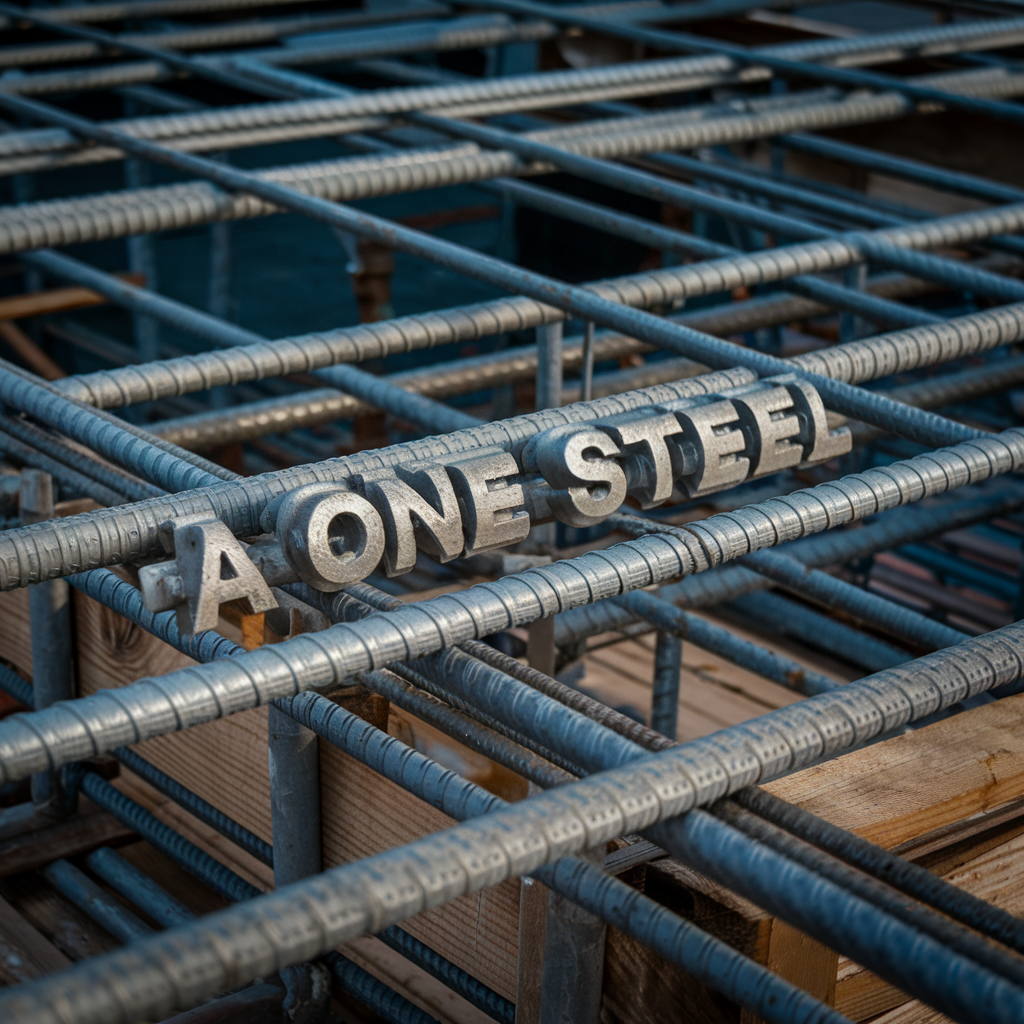
A One Steel Mills
What Are Steel Rebars?
Steel rebars (reinforcing bars) are specially designed steel rods used to strengthen concrete structures. Concrete is strong in compression but weak in tension, and steel rebars provide the tensile strength required to prevent cracking, bending, and structural failure.
Rebars are used in:
Foundations
Beams and columns
Slabs and roofs
Bridges and infrastructure
In modern construction, rebars are the final and most important form of steel used on-site.
Products
Steel Rebars We Manufacture
At A One Steel Mills, we manufacture different grades of steel rebars to meet diverse construction needs across Karachi, Pakistan.

Supreme ( Astm A-615)
Minimum Yield Strength: 60,000 PSI (420 MPA)
Minimum Tensile Strength: 80000 PSI (550 MPA)
Bar Elongation: 8-10%
Flexible Elite ( Astm A-706)
Minimum Yield Strength: 60,000 PSI (420 MPA)
Maximum Yield Strength: 78000 PSI(540 MPA)
Minimum Tensile Strength: 80,000 PSI (550 MPA)
Tensile to Yield Strength Ratio > 1.25
Bar Elongation: 12-14%
Earthquake Resistance Re-Bar (BS4449_G500)
Minimum Yield Strength: 72,500 PSI (500 MPA)
Minimum Tensile Strength: 88,000 PSI (607 MPA)
Revised British Standard 2016
longation Minimum= 12.5%
Billets
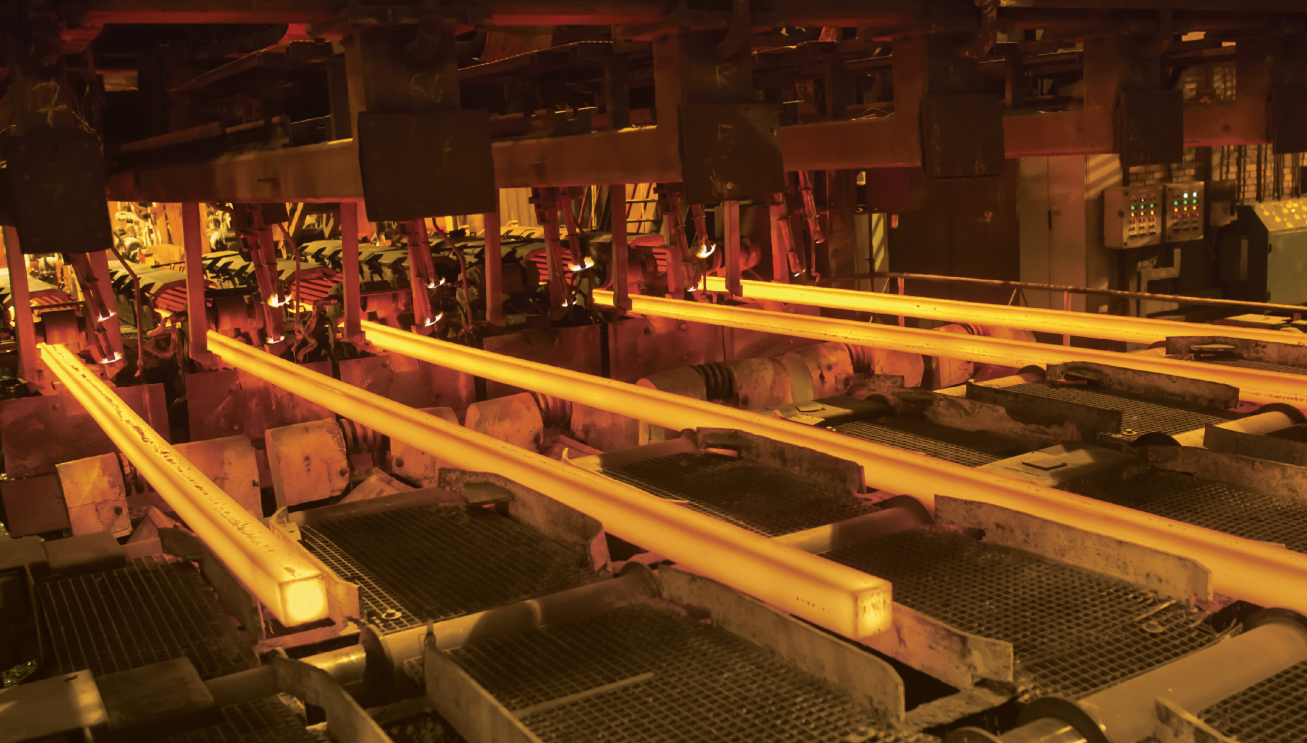
Billets are intermediate steel products from which reinforcement bars are rolled. At A One Steel Mills, we produce our own billets to ensure consistent physical and mechanical properties in our rebars. We use premium quality raw materials to manufacture our bills, which are both corrosion-resistant and high in tensile strength. Our billets adhere to international standards, including ASTM A05, ASTM A706, and BS 4449 2016
We also manufacture steel bars tailored to custom-made orders, ensuring that each product meets the specifio requirements and preferences of our clients.
Our Process
Scrap
We source high-quality scrap, including HMS1, HMS 1&2, and ISRI, from various regions worldwide, primarily Europe. Our facility is equipped with heavy-duty cranes for efficient scrap transfer. Industrial magnets are utilized to convey the scrap into our induction furnace for melting.
Electric Induction Furnace
Scrap is loaded into our furnace using industrial buckets, where it is melted and transformed into prime billets. Throughout this process, we meticulously monitor the chemical composition- including Carbon, Manganese, Phosphorus, Sulfur, and Silicon-to ensure the billets meet international standards.
CCM
Scrap melted in the induction furnace is processed through the Continuous Casting Machine, which precisely converts the molten material into billets for the steel-making process.
Billets
These precisely hot-rolled billets, the primary raw material for steel rebars, are now ready for direct rolling in the mill.
Rolling Mill
The hot-rolled billets are transported via conveyors to our automatic rolling mill, where they are transformed into steel rebars.
Cooling Bed
The hot steel rebars are transferred to our 120-foot cooling bed, where they are carefully cooled and precisely cut to length, either per foot or according to customer specifications, before being prepared for bundling.
Dispatch
Before dispatch, steel rebars are carefully weighed and bundled. To ensure compliance with international standards, random testing is conducted in our in-house laboratories, with any rejected pieces promptly separated. Each bundle is then labeled with our tag, signifying it is ready for dispatch.
Our Process
Scrap
We source high-quality scrap, including HMS1, HMS 1&2, and ISRI, from various regions worldwide, primarily Europe. Our facility is equipped with heavy-duty cranes for efficient scrap transfer. Industrial magnets are utilized to convey the scrap into our induction furnace for melting.
Electric Induction Furnace
Scrap is loaded into our furnace using industrial buckets, where it is melted and transformed into prime billets. Throughout this process, we meticulously monitor the chemical composition- including Carbon, Manganese, Phosphorus, Sulfur, and Silicon-to ensure the billets meet international standards.
CONTINUOUS CASTING (CCM)
Scrap melted in the induction furnace is processed through the Continuous Casting Machine, which precisely converts the molten material into billets for the steel-making process.
BILLET PREPARATION
These precisely hot-rolled billets, the primary raw material for steel rebars, are now ready for direct rolling in the mill.
Rolling Mill
The hot-rolled billets are transported via conveyors to our automatic rolling mill, where they are transformed into steel rebars.
Cooling Bed
The hot steel rebars are transferred to our 120-foot cooling bed, where they are carefully cooled and precisely cut to length, either per foot or according to customer specifications, before being prepared for bundling.
Dispatch
Before dispatch, steel rebars are carefully weighed and bundled. To ensure compliance with international standards, random testing is conducted in our in-house laboratories, with any rejected pieces promptly separated. Each bundle is then labeled with our tag, signifying it is ready for dispatch.
Steel Rebars for Different Construction Needs
Different projects require different types of steel rebars:
Residential buildings: ASTM A615 for slabs, beams, and columns
Commercial structures: ASTM A706 for improved flexibility
Infrastructure projects: BS4449 G500 for heavy-duty performance
Seismic zones: High-ductility rebars for earthquake safety
Choosing the right rebar grade ensures structural stability, long-term durability, and reduced maintenance costs.
Why Choose A One Steel Mills Steel Rebars?
Builders prefer A One Steel Mills because:
Locally manufactured steel rebars in Karachi
Compliance with ASTM and British standards
Strict quality testing (tensile, bend, elongation)
Consistent strength and uniform dimensions
Reliable bulk supply and timely delivery
Our focus is not just selling steel, but supporting safe and long-lasting construction.
Build Strong with A One Steel Mills –
Contact Us Today
Frequently Asked Questions About Steel Rebars
Steel bars is a general term, while steel rebars are specifically designed for reinforced concrete construction.
ASTM A706 and BS4449 G500 are preferred for seismic resistance due to higher ductility.
Yes, all our rebars undergo tensile, bend, and elongation tests before dispatch.
Yes, A One Steel Mills supplies bulk steel rebars across Karachi and Pakistan.